Accept
 Reject



 0345 224 3691



 Enjoy the May Bank Holiday!
Price Match
We guarantee our prices are extremely competetive and should be the BEST prices you will find on-line, along with delivering the very best service. For this reason, we offer a price match against other on-line sellers. If you find the same product elsewhere on line, give us a call on 0345 224 3691 and we will match or even beat it! Note that the following conditions must be met for the price match to apply:
- The item must be available on a UK website at the advertised price, and readily available to purchase, with a like for like delivery offering.
-The item in question must have the same specifications, quantity and be produced by the same manufacturer - although we will usually price match even if made by a different manufacturer, as long as its a comparable quality.
- Auction sites such as ebay and amazon do not qualify for price match.
- The price match cannot be used in conjunction with any discount codes or promotional items.
- If there are pricing errors on competitors sites that are clear typographical pricing errors, these will not be matched.
- Note that for corrugated lines (boxes/cartons), the item must be of the same specification (fluting and thickness) and be unbranded.
Call us on 0345 224 3691 and we will be more than happy to help!
Packing Peanuts vs Shredded Paper: Which is Better for Protection?
Key Takeaways
-
Packing peanuts and shredded paper both fill void space inside cartons, but they protect differently, so the right pick depends on what you ship and how your brand presents the unboxing.
-
Choosing on price alone is the common mistake. Protection, parcel weight, end-customer disposal, and brand fit matter more than the per-litre cost for most shipments.
-
Globe Packaging supplies both ranges, so the choice is about fit rather than supplier: biodegradable cornstarch peanuts for fragile and irregular items, and recycled or virgin kraft shredded paper for eco-led and gift presentation.
-
Biodegradable cornstarch peanuts deliver the same impact protection as polystyrene with no static cling, while shredded paper goes straight into kerbside recycling and adds more parcel weight.
-
Globe Packaging stocks biodegradable packing peanuts and recycled kraft shredded paper from a 60,000 sq ft UK depot, with same-day dispatch on orders placed by 4pm and free next-working-day delivery on UK Mainland orders over £50.
Choosing Between Packing Peanuts and Shredded Paper
Packing peanuts and shredded paper are the two main void-fill options for filling empty space inside cartons, and they protect in different ways. Packing peanuts give stronger impact absorption at lower weight, which suits fragile and irregularly shaped items that need cushioning on every side. Shredded paper gives cleaner kerbside disposal and a more premium unboxing, which suits eco-led brands and lighter goods. Which one fits depends on what you ship, what your parcels weigh, and how you want the box to feel when the customer opens it.
Void fill is one of the quietest decisions in a shipping operation, yet it shapes both damage rates and the impression a brand leaves at the doorstep. Getting it right protects the product and the relationship at the same time.
The sections below break down how each material protects, what each one costs, and the specific shipments where peanuts or paper is the better call.



What Are Packing Peanuts and How Do They Protect Shipments?
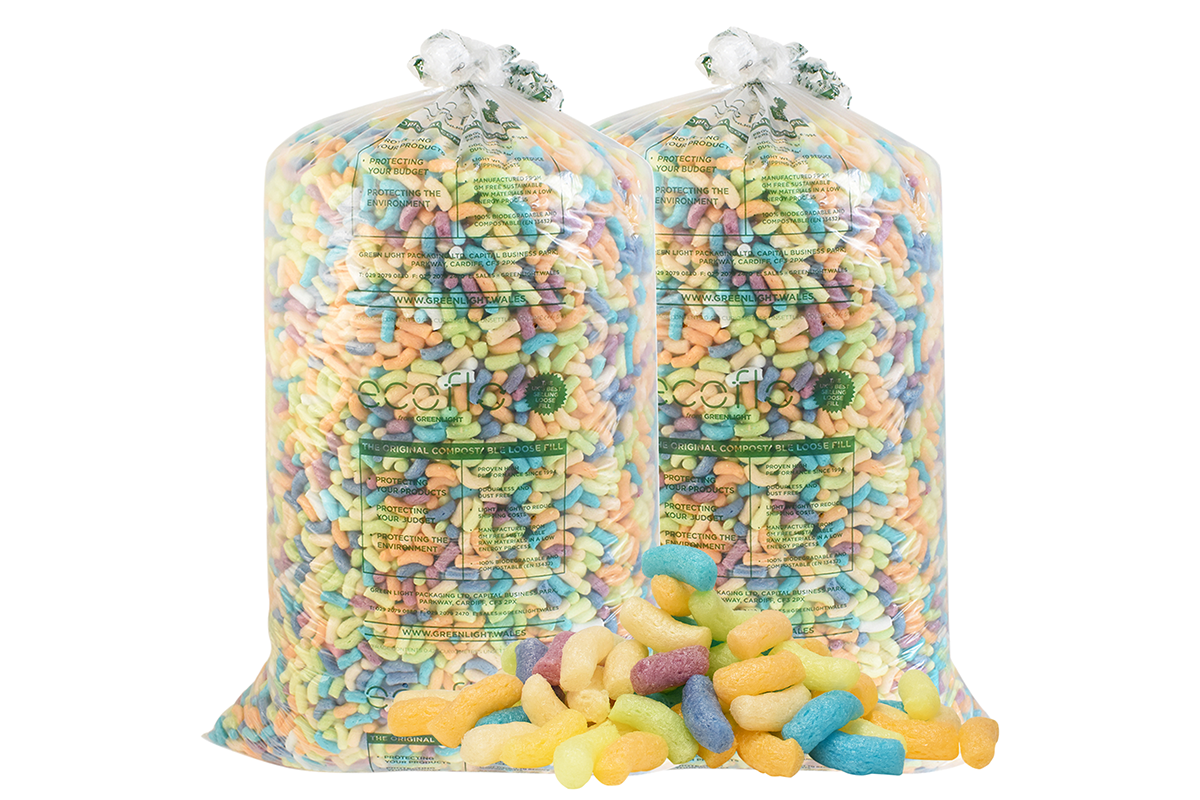
Biodegradable cornstarch packing peanuts dissolve in water and produce no static cling,
replacing polystyrene without losing impact protection.
Packing peanuts are small foam pieces (typically 15 to 25mm in size) shaped to interlock when packed loosely inside a carton. The interlocking shape creates a stable matrix that distributes impact forces across the bulk of the material rather than transferring shock directly to the contents. Traditional packing peanuts use expanded polystyrene (EPS), while modern biodegradable variants use cornstarch or similar plant-based materials that dissolve in water and break down completely in composting conditions.
The primary advantage of packing peanuts is impact absorption. The combination of low weight, high volume per unit, and shock-distributing structure makes peanuts one of the most effective void-fill materials for fragile and irregularly shaped goods. Peanuts flow around items of any shape, filling gaps that pre-formed protective inserts cannot reach, which makes them particularly useful for mixed-content shipments and items where the geometry does not match standard packaging templates.
The trade-offs are environmental and operational. Polystyrene peanuts are difficult to recycle through standard UK collection streams and produce significant static cling that frustrates end customers during unboxing. Biodegradable cornstarch peanuts solve both problems, dissolving in water for easy disposal and producing no static, though they sit at a small cost premium over polystyrene equivalents.
What Is Shredded Paper Void Fill and How Does It Protect Shipments?
Shredded paper is the right choice when brand positioning, end-customer experience,
and full kerbside recyclability matter more than maximum impact protection.
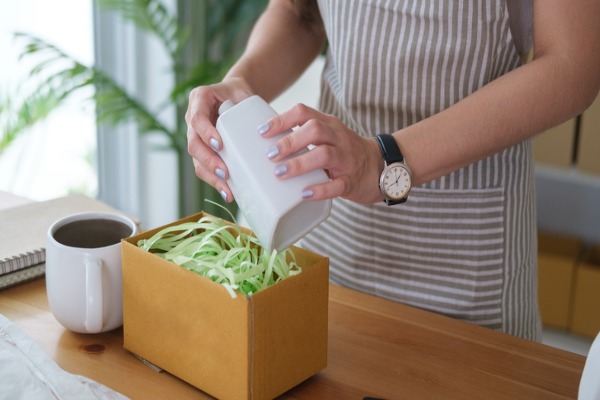
Shredded paper void fill uses cut or crinkled paper to fill empty space inside cartons. The paper is typically cut into 4 to 8mm wide strips and can be sourced as virgin kraft paper, recycled paper, or coloured paper depending on brand and presentation requirements. Some variants use crinkle-cut paper, with a crimped or wavy texture, that interlocks better than straight-cut shred and stays in place during transit.
The primary advantage of shredded paper is sustainability and end-customer experience. Paper goes into standard kerbside recycling across UK council areas, which makes it the easiest void fill for end customers to dispose of. It also looks more premium in the unboxing moment than industrial peanuts, particularly when natural kraft or branded coloured variants align with the product presentation. For e-commerce brands building positioning around natural materials, gift presentation, or sustainability, shredded paper supports the brand voice in a way that even biodegradable peanuts cannot fully match.
The trade-offs are weight and impact protection. Shredded paper is denser than packing peanuts and adds more weight to the finished parcel, which affects courier pricing for items where dimensional weight matters less than actual weight. Impact protection is also lower than peanuts at equivalent volume, which means shredded paper suits lighter and less fragile goods rather than heavy or highly fragile items.
Packing Peanuts vs Shredded Paper: Direct Comparison
What Are the Best Use Cases for Each Material?
When to Use Packing Peanuts
-
Fragile and high-value items: Glassware, ceramics, electronics components, and other fragile goods benefit from the strong impact absorption that peanuts provide across all sides of the contents.
-
Irregularly shaped products: Items with complex geometry (machinery parts, decorative goods, multi-part products) need void fill that flows around the shape, which peanuts do better than any alternative.
-
Mixed-content shipments: When packing multiple items of different sizes and weights into a single carton, peanuts immobilise each item and prevent collision damage between contents.
-
Lightweight items needing dimensional protection: When the parcel is mostly empty space around lightweight contents, peanuts fill the volume without significantly increasing weight or courier pricing.
-
Long-transit shipments: International and pallet-stacked shipments exposed to extended compression and multiple handovers benefit from peanuts' superior shock distribution.
When to Use Shredded Paper
-
Eco-focused and sustainability-led brands: Paper supports natural materials positioning and gives customers a wrap that recycles through standard household collections.
-
Premium and gift presentation: Natural kraft or coloured shredded paper looks more refined in the unboxing moment than industrial peanuts, particularly for products positioned around craftsmanship or artisanal quality.
-
Lighter goods with lower fragility risk: Books, clothing, accessories, and non-fragile retail goods do not need the impact absorption that peanuts provide, making shredded paper the more cost-effective and brand-aligned choice.
-
Subscription boxes and curated retail: Shredded paper produces the "reveal" moment that subscription brands and curated gift retailers use to enhance unboxing, particularly when the paper colour matches brand visuals.
-
Returns and reusable packaging contexts: Customers can reuse shredded paper for their own packing or composting more easily than peanuts, which supports circular brand positioning.
Match the Void Fill to the Shipment, Not the Other Way Round
The best void fill comes down to what you ship and how you want it received. Packing peanuts give stronger impact protection at lower weight for fragile glassware and ceramics, irregular shapes that inserts cannot cover, mixed-content cartons, and long-transit parcels under stacking pressure, with biodegradable cornstarch variants matching polystyrene without the static or disposal problems. Shredded paper gives full kerbside recyclability, cleaner disposal, and a natural finish that fits eco-focused brands, premium gift presentation, and curated retail.
For UK businesses weighing the two, Globe Packaging supplies both biodegradable peanuts and recycled kraft shredded paper from a single 60,000 sq ft UK depot, so you can order the right material for each product line without splitting suppliers. Orders placed by 4pm get same-day dispatch, and UK Mainland orders over £50 ship free on the next working day.
Frequently Asked Questions (FAQs)
Which provides better impact protection: packing peanuts or shredded paper?
Packing peanuts provide stronger impact absorption than shredded paper at equivalent volume. The interlocking shape and lightweight foam structure distribute shock across the bulk of the material rather than transferring impact directly to the contents. Shredded paper provides moderate protection that suits lighter goods and lower-risk shipments, but for fragile items including glassware, ceramics, and electronics, peanuts are the more reliable choice for preventing transit damage.
Are biodegradable packing peanuts as protective as polystyrene peanuts?
Yes. Biodegradable cornstarch packing peanuts provide protection comparable to traditional polystyrene at the same volume and shape. The structural performance is similar, but biodegradable variants add the advantages of water-soluble disposal, no static cling, and full compostability. The trade-off is a small cost premium over polystyrene and slightly shorter shelf life, with most biodegradable peanuts maintaining protective performance for 12 to 18 months from manufacture.
Is shredded paper recyclable for end customers?
Yes. Shredded paper goes into standard kerbside paper recycling across UK council areas, which makes it the easiest void fill for end customers to dispose of correctly. Paper recycling streams accept shredded paper from packaging without any special handling required. This is one of the main reasons sustainability-focused brands choose shredded paper over peanuts, even when peanuts are biodegradable, because the customer experience of disposal is simpler and more universal.
Can I use shredded paper from a paper shredder for packaging?
Repurposing office shred for packaging is possible for very low-volume operations, but it has practical limitations. Office shred typically uses thinner paper, contains varying paper types that may mix non-recyclable elements, and produces inconsistent cut sizes that look less polished in the unboxing moment. For brand-aligned presentation and consistent protective performance, purpose-cut shredded paper from packaging suppliers produces significantly better results.
Where can I buy packing peanuts and shredded paper in the UK with fast delivery?
Globe Packaging stocks the full range of void-fill packaging from its 60,000 sq ft UK depot, including biodegradable cornstarch packing peanuts, recycled and virgin kraft shredded paper, crinkle-cut paper for premium presentation, and coloured shredded paper for brand-aligned unboxing. Orders placed by 4pm receive same-day dispatch, and orders over £50 (exc VAT) qualify for free next-working-day delivery across UK Mainland.
Note: Product listings, prices, and delivery times shown are approximate and subject to change. Contact Globe Packaging for the latest information.
Related Articles
-resized-to-600x400.jpeg)
-resized-to-600x400.jpeg)
About Us
| Terms & Conditions | Delivery Services & Costs | Privacy Policy | Return & Exchanges | Payment | Testimonials | Overview | Video | E-Commerce | Amazon APass | PayPal Branded | Press | Catalogue | Learning | Contact | Sitemape-Commerce solutions by KOL Limited
All displayed prices are exclusive of VAT at 20%