0345 224 3691



 Enjoy the May Bank Holiday!

Price Match
We guarantee our prices are extremely competetive and should be the BEST prices you will find on-line, along with delivering the very best service. For this reason, we offer a price match against other on-line sellers. If you find the same product elsewhere on line, give us a call on 0345 224 3691 and we will match or even beat it! Note that the following conditions must be met for the price match to apply:
- The item must be available on a UK website at the advertised price, and readily available to purchase, with a like for like delivery offering.
-The item in question must have the same specifications, quantity and be produced by the same manufacturer - although we will usually price match even if made by a different manufacturer, as long as its a comparable quality.
- Auction sites such as ebay and amazon do not qualify for price match.
- The price match cannot be used in conjunction with any discount codes or promotional items.
- If there are pricing errors on competitors sites that are clear typographical pricing errors, these will not be matched.
- Note that for corrugated lines (boxes/cartons), the item must be of the same specification (fluting and thickness) and be unbranded.
Call us on 0345 224 3691 and we will be more than happy to help!
How to Package Ceramics for Shipping: Step-by-Step Guide
Key Takeaways
-
Movement inside the box is one of the most common causes of ceramic breakage, so every gap should be filled until the contents stay still when shaken.
-
Two to three layers of bubble wrap, with the second turned 90 degrees, protect the piece, while lids are wrapped separately and hollow items are filled with crumpled paper.
-
A 5–8 cm base of packing peanuts, crumpled paper, or foam absorbs shock from below, with a thicker layer needed for heavier pieces.
-
Fragile or commissioned pieces benefit from double-boxing, and every box should be sealed with the H-tape method and labelled as fragile with the top marked.
-
At Globe Packaging, we supply materials for every stage of packing ceramics, from acid-free tissue and bubble wrap for wrapping to packing peanuts for the base and tape for sealing.
Why Do Ceramics Break in Transit?
Internal movement causes many of the cracks and chips that pottery picks up in transit, because a mug or bowl that can slide, rotate, or knock against cardboard takes a fresh impact whenever the parcel is handled. For potters selling online, a cracked piece often means a refund, a lost customer, and a review that costs future sales.
What catches most sellers off guard is assuming thicker bubble wrap fixes the problem on its own. Padding absorbs shock, but a well-wrapped piece can still break if it has room to move. That’s why the key to packaging ceramics for shipping is pairing cushioning with immobilisation, so the piece stays still once the box is sealed.
At Globe Packaging, we stock over 65 cardboard box sizes, making it easier to pick a carton that leaves room for padding on every side without extra space for the piece to shift.



Step-by-Step Guide to Packing Ceramics for Shipping
Follow these eight steps to pack ceramics so they arrive in one piece:
- Clean, check, and photograph the piece before packing.
- Wrap it in two to three layers of bubble wrap, turning the second layer 90 degrees.
- Wrap lids separately and fill hollow pieces with crumpled paper, tissue, or loose fill.
- Line the base of the box with 5–8 cm of padding to absorb shocks during transit.
- Centre the piece and fill every gap so it cannot move.
- Double-box commissions and high-value pieces.
- Seal with the H-tape method and label the box as fragile.
- Shake-test the sealed box before it ships.
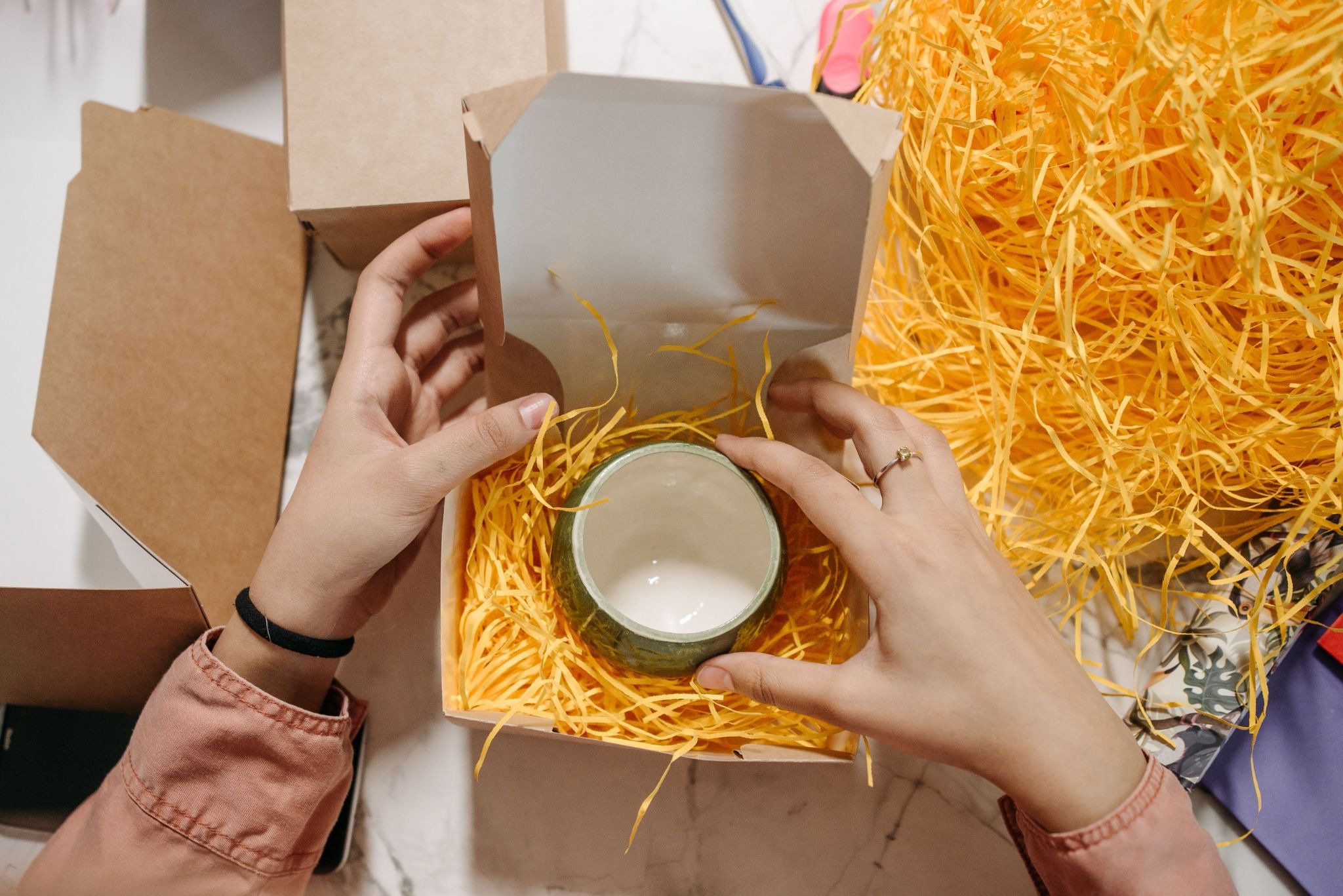
Shredded paper fill suits small, lightweight ceramics packed in snug boxes, where it cushions the piece from every side.
Step 1: Clean, Check, and Photograph the Piece
Start with a dry, clean surface, because glaze dust and fingerprints hide the hairline cracks you want to spot before the piece goes anywhere near a box. Run a finger around the rim, the foot, and any joint where a handle meets the body. Set aside anything that moves independently, such as a lid or a slotted attachment, since those parts travel in the same parcel but get their own wrapping later.
Photograph the piece from two or three angles while it is still unwrapped. If a damage claim arises, a dated photo of the piece’s pre-shipment condition gives your claim far stronger support than a written description alone.
Before you book, check your carrier’s terms for fragile items, as some UK services limit or exclude compensation for ceramics and glass. If the glaze is hand-painted or the surface is left unsealed, lay acid-free tissue against it first so nothing coarser touches the finish.
Step 2: Wrap the Ceramic Correctly
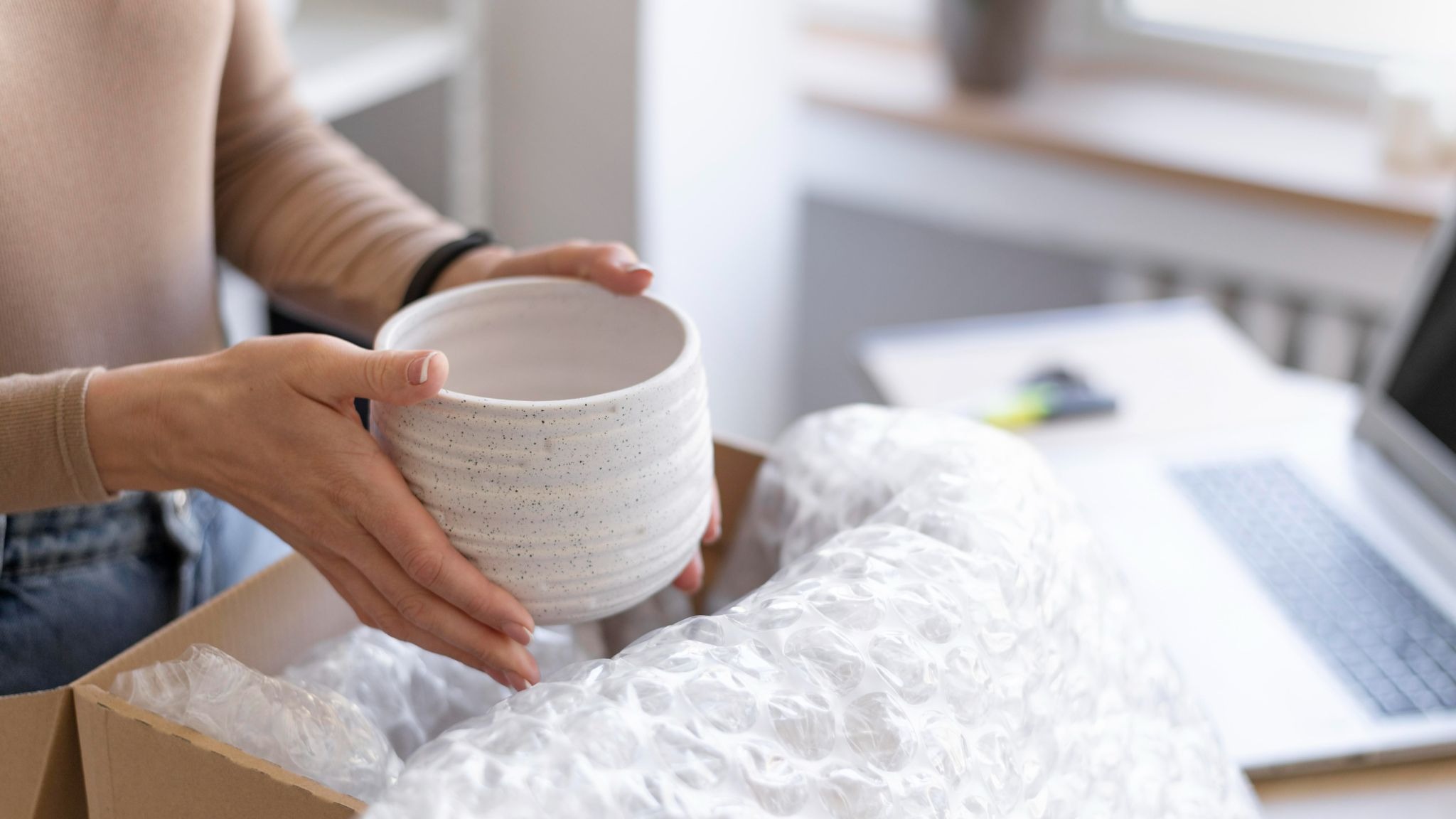
Two to three layers of bubble wrap form the core of ceramic protection. Small bubble wrap, with bubbles of around 10mm, sits closely against curved surfaces, and 300mm or 500mm widths suit most mugs and bowls. If you prefer a more sustainable option, biodegradable bubble wrap works with the same layering method.
Place the piece in the centre of the first sheet and wrap it snugly enough that every surface, including the base, is covered. Secure the wrap with a small piece of tape placed only on the bubble wrap itself, never directly on the ceramic, since tape residue can damage glazed or unglazed surfaces alike.
Irregular shapes need extra attention at their weak points. Handles, spouts, and rims concentrate pressure during transit, so add a layer of padding specifically at these spots before wrapping the rest of the piece.
Once the first layer is secure, apply a second layer of bubble wrap rotated 90 degrees from the first. This cross-pattern closes gaps that a single wrapping direction tends to leave, and it ensures the ceramic never makes direct contact with the interior walls of the box.
Step 3: Protect Lids, Handles, and Hollow Spaces
Any lid or detachable part identified during preparation should now be wrapped on its own in bubble wrap, separate from the main body. Once wrapped, position it beside the main item inside the box rather than on top of or underneath it, with a layer of foam or folded paper placed between the two to stop them rubbing or knocking together in transit.
Hollow items such as vases, jugs, mugs, or teapots need internal support as much as external padding. Gently fill the interior with crumpled paper, soft tissue, or packing peanuts, enough to stop the walls flexing under pressure but not so tightly packed that it strains the ceramic from the inside.
Step 4: Build a Shock-Absorbing Base
Before placing the wrapped ceramic into the box, line the bottom with at least 5 cm (2 inches) of padding, building up to 8 cm (3 inches) for heavier pieces. Packing peanuts, crumpled paper, or foam all work, and the thicker base on heavier pieces absorbs the extra force generated if the parcel is dropped or jolted during handling.
When shipping multiple items in one box, add a sheet of corrugated cardboard beneath the padding layer. This spreads weight evenly across the base rather than concentrating it under one heavy piece, which reduces the chance of the box bottom buckling under transit stress.
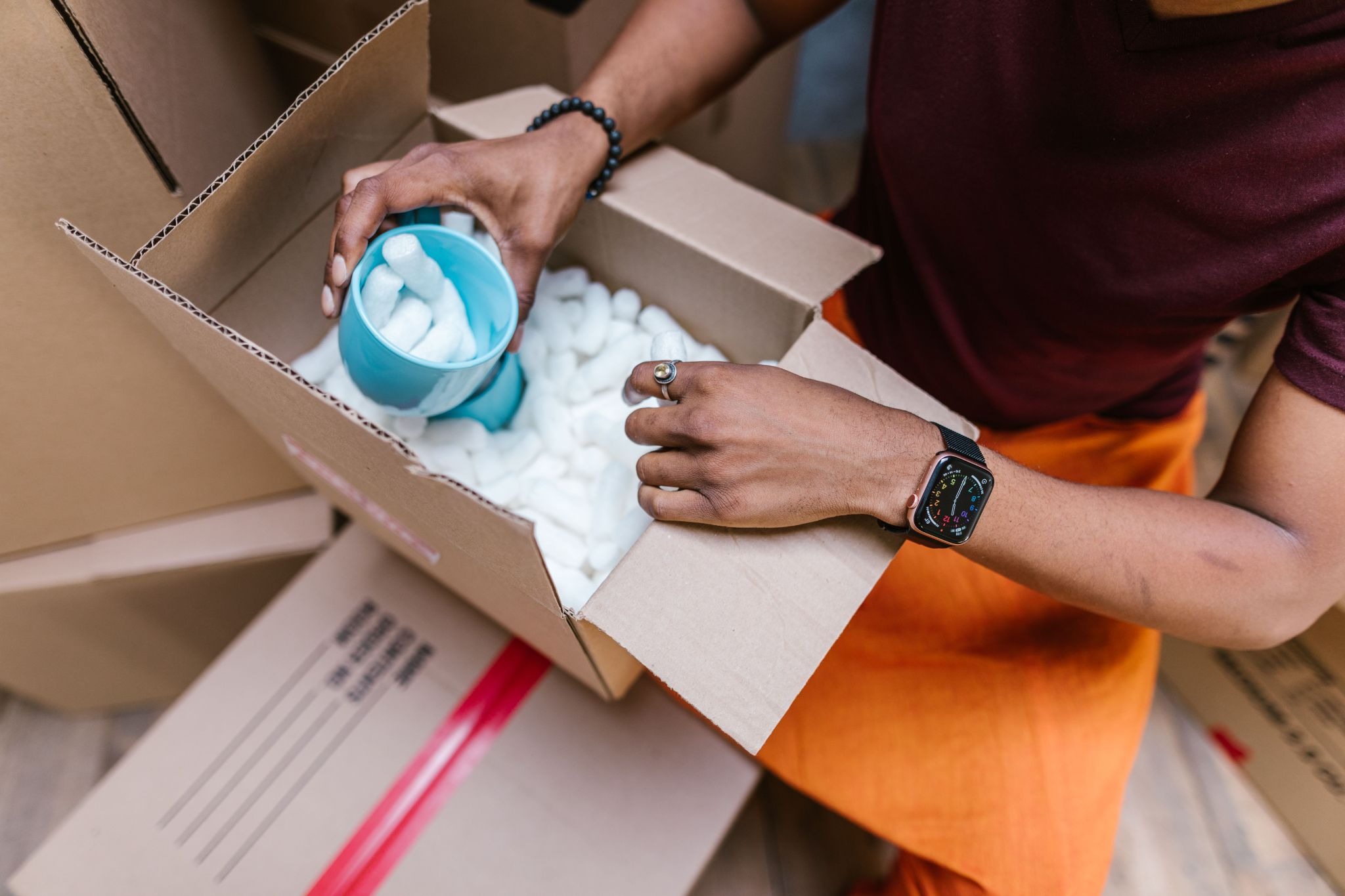
Hollow pieces such as mugs need support inside and out, so filling the cup itself helps its walls resist pressure in transit.
Step 5: Position and Immobilise the Item in the Box
Place the wrapped ceramic in the centre of the box, then fill every remaining gap with crumpled paper, paper void fill, foam, or packing peanuts. The goal is immobilisation rather than cushioning alone, since a piece that can shift even a few centimetres takes a fresh knock at every handling stage, which does more damage over a journey than a single drop.
Shipping several small ceramics in one parcel requires individual wrapping for each piece plus cardboard dividers between them, stopping them from knocking against each other. Before closing the flaps, press lightly on the filler and gently rock the open box. If anything shifts, add more filler until the contents are completely stationary.
Step 6: Double-Box Commissions and Gallery Work
Pieces with a high replacement value earn a second shell. Pad and seal the inner box as normal, then set it inside a larger [double wall box]([link: double wall boxes category]) with 5–8 cm of filler around every face. Impact spends itself in that outer gap, so whatever reaches the inner box has already been reduced. The extra material pays for itself on long routes and on any shipment that changes courier partway.
Step 7: Seal and Label the Box the Right Way
Close the box and reinforce every seam with strong packing tape using the H-tape method: one strip down the centre seam where the flaps meet and one strip across each of the two edge seams, repeated on both the top and bottom of the box. For busy packing stations, heavy-duty ProLoc Low Noise Tape keeps sealing quick and quiet.
Add extra tape at the corners, since these points take the most stress during handling. Label the parcel clearly as “FRAGILE: Handle with Care”, or seal the seams with printed Fragile tape, and mark which side is the top. Slip a duplicate address label inside the box as well, so the parcel can still be identified if the outer label is damaged or torn off in transit.
Step 8: Shake It Before It Leaves
Pick up the sealed box and give it a gentle shake, then a slow tilt in each direction. Silence and stillness mean the pack is ready to go. Anything you can hear or feel means a void opened up somewhere during sealing.
Open the box, top up the filler around the loose area, and reseal using the same H pattern. The check costs under a minute, which is far less than a replacement piece, a refunded order, and the postage on both.
Keep Ceramics Protected in Transit With Globe Packaging

Having the right materials on hand before packing starts is what keeps a parcel from being under-protected.
Safe ceramic shipping comes down to layered bubble wrap, a padded base, gap-free filling, and secure taping, and each of those steps depends on having the right materials ready when a piece is packed. Running short on bubble wrap or the correct box size mid-pack often leads to rushed, under-protected parcels.
At Globe Packaging, we supply the bubble wrap, corrugated boxes, void fill, and packing tape that ceramic shipments rely on. With same-day dispatch on orders placed by 4pm and free next working day delivery within UK Mainland on orders over £50 (exc VAT), restocking between sales is simple. Keeping these essentials on the shelf means every piece leaves fully protected, so order your packaging supplies before the next sale comes in.
Frequently Asked Questions (FAQs)
How much bubble wrap do I need to ship ceramics?
Most ceramic pieces need two to three layers of bubble wrap, with the second layer applied at a 90-degree angle to the first. Add extra wrap around handles, spouts, and rims, since these points take the most pressure during transit and are more prone to chipping.
Can I use newspaper instead of bubble wrap for ceramics?
Recycled materials such as newspaper, shredded paper, or old fabric can work as padding, but they lack the shock absorption bubble wrap provides. Be cautious with delicate glazes, as ink from newspaper can transfer onto the surface, so use plain packing paper or tissue against the ceramic itself.
What is the best box size for shipping a ceramic vase?
Choose a box that leaves 5–8 cm of space around the wrapped vase on every side, including top and bottom, using the upper end of that range for heavier vases. This space allows for proper base padding and void fill without forcing the piece against the box walls, which increases the risk of damage.
Do I need insurance to ship ceramics?
Insurance makes sense once the replacement cost would hurt, which usually means commissions, gallery stock, and larger one-off works. Each carrier sets its own claim requirements, and some UK services limit or exclude cover for ceramics and glass, so check the terms before you post. Keep your unwrapped photos, packed weight, and measurements on file in case you need to make a claim.
What packaging supplies can I buy from Globe Packaging?
At Globe Packaging, we provide bubble wrap, boxes, tape, and void fill suited to shipping fragile ceramic items. Visit our site to check available materials and order supplies ahead of your next shipment.
*Note: Product listings, prices, and delivery times shown are approximate and subject to change. Contact Globe Packaging for the latest information.
Related Articles
-resized-to-600x400.jpeg)
-resized-to-600x400.jpeg)
About Us
| Terms & Conditions | Delivery Services & Costs | Privacy Policy | Return & Exchanges | Payment | Testimonials | Overview | Video | E-Commerce | Amazon APass | PayPal Branded | Press | Catalogue | Learning | Contact | Sitemape-Commerce solutions by KOL Limited
All displayed prices are exclusive of VAT at 20%