Accept
 Reject


 0345 224 3691



 Enjoy the May Bank Holiday!

Price Match
We guarantee our prices are extremely competetive and should be the BEST prices you will find on-line, along with delivering the very best service. For this reason, we offer a price match against other on-line sellers. If you find the same product elsewhere on line, give us a call on 0345 224 3691 and we will match or even beat it! Note that the following conditions must be met for the price match to apply:
- The item must be available on a UK website at the advertised price, and readily available to purchase, with a like for like delivery offering.
-The item in question must have the same specifications, quantity and be produced by the same manufacturer - although we will usually price match even if made by a different manufacturer, as long as its a comparable quality.
- Auction sites such as ebay and amazon do not qualify for price match.
- The price match cannot be used in conjunction with any discount codes or promotional items.
- If there are pricing errors on competitors sites that are clear typographical pricing errors, these will not be matched.
- Note that for corrugated lines (boxes/cartons), the item must be of the same specification (fluting and thickness) and be unbranded.
Call us on 0345 224 3691 and we will be more than happy to help!
Cornstarch vs Styrofoam Packing Peanuts: Differences, Disposal & Recycling
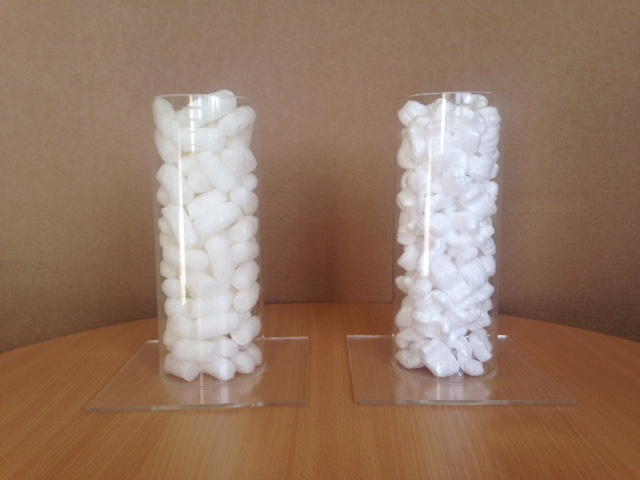
Key Takeaways
-
Cornstarch and styrofoam packing peanuts can look identical in the bag, and both are commonly sold in white, so colour alone is not a reliable way to tell them apart.
-
Cornstarch peanuts dissolve in water within a couple of minutes, are naturally non-static, and feel soft and crumbly, while styrofoam peanuts float intact, build static cling, and feel rigid with a faint squeak.
-
Cornstarch peanuts can be dissolved in a sink or home-composted if they carry an OK compost HOME mark, while styrofoam peanuts carry resin code #6 but rarely qualify for kerbside collection and need a dedicated drop-off point.
-
Storage separates the two materials sharply: cornstarch peanuts absorb moisture from humid air and clump before they are used, while styrofoam holds its shape in damp conditions indefinitely.
-
Globe Packaging stocks both cornstarch-based Ecoflo biodegradable loose fill and styrofoam packing peanuts in 15 cubic foot bags, with free next-working-day delivery on UK mainland orders over £50.
What Cornstarch & Styrofoam Packing Peanuts Are Made Of
Cornstarch packing peanuts are manufactured from plant-based starch, typically corn or potato, pressed into a foam shape that dissolves when it meets water. Styrofoam packing peanuts are expanded polystyrene (EPS), a petroleum-based plastic blown with air into a rigid, lightweight foam that does not absorb water, does not break down in soil, and holds its shape for decades.
The two materials start from completely different sources and end in completely different places once a parcel has been unpacked. Cornstarch peanuts can be broken down in water or composted where they carry the right certification, while styrofoam peanuts are technically recyclable but need a dedicated drop-off point, so knowing which one is in the bag decides where it ends up.



Differences Between Cornstarch & Styrofoam Packing Peanuts
Static & Electronics Safety
Plain white styrofoam peanuts build up static and cling to hands, clothing, and packing tape, which is why a pink antistatic grade was developed specifically for shipping circuit boards, laptops, and other sensitive components. Cornstarch peanuts are naturally non-static without any chemical treatment, so they can be used around electronics straight from the bag.
Best Uses for Each Material
Both materials fill void space inside a box, but they suit different products and packing environments. Cornstarch peanuts are lighter and naturally non-static, which makes them a cleaner choice for shipping clothing, cosmetics, food-adjacent items, and anything where static cling or petroleum-based residue is unwanted.
Styrofoam peanuts provide firmer cushioning that holds its position better around heavier or oddly shaped items, and the pink antistatic grade handles electronics shipments where cornstarch's moisture sensitivity could become a risk in transit during wet or humid conditions.
Storage
Cornstarch peanuts are hygroscopic, meaning they pull moisture from the air. A bag left in a damp stockroom, garage, or basement can soften and clump into an unusable block within weeks, so they need to be stored sealed, indoors, and off the floor. Styrofoam peanuts hold their shape indefinitely in the same damp conditions, which makes them the more forgiving option for warehouses without climate control.
How Can You Tell Cornstarch & Styrofoam Packing Peanuts Apart?
The Water Test That Reveals the Truth in Seconds
Water settles the question almost instantly. Drop a cornstarch peanut into a glass of water and it begins softening within seconds, turning sticky and breaking apart into a starchy residue within a couple of minutes.
An EPS styrofoam peanut behaves completely differently. It floats on the surface and stays exactly as it was, since the plastic foam doesn't absorb or react with water at all. This test works well for anyone unsure what's sitting in a storage bin, and it only takes a glass of water and a few seconds to confirm.
Squeeze Test: Rigid & Squeaky vs Soft & Crumbly
The second check is purely tactile. Squeeze a styrofoam peanut, and it feels rigid, often producing a faint squeak as the foam compresses. Cornstarch peanuts feel noticeably softer and more crumbly by comparison, especially if they've been sitting in a humid room and have started absorbing moisture from the air. That texture difference alone can confirm what's in a bag before it's even opened fully, which matters when deciding whether a batch is still fit for reuse.
Why Colour Is the Least Reliable Test
Colour is usually the first thing people check, but it is the least reliable clue. Traditional EPS peanuts are typically white, but pink antistatic versions are common in electronics shipments. Cornstarch peanuts are sometimes tinted green or off-white to distinguish them from plastic foam, yet plenty are sold plain white as well.
That overlap means a white peanut could be either material, and a green peanut could be styrofoam marketed with an eco-looking colour. Water and texture are the tests that actually confirm the material.
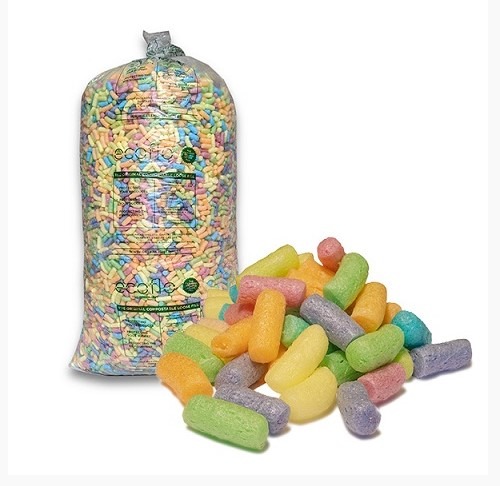
Ecoflo cornstarch loose fill is UK-manufactured, fully biodegradable, and dissolves in water once it’s done its job.
Disposing of Cornstarch & Styrofoam Packing Peanuts
Cornstarch peanuts dissolve in plain water within seconds to a few minutes, which makes sink or drain disposal straightforward for small amounts. For composting, check the bag first: some cornstarch peanuts are certified to EN 13432, a European standard confirming they break down in an industrial composting facility.
That certification does not cover a garden compost heap, because industrial facilities run hotter and more consistently than a home pile. Home composting only works if the product specifically carries a mark like TÜV Austria’s OK compost HOME. Without that mark, dissolving in water remains the simplest disposal method.
Styrofoam peanuts do not break down in water, soil, or any composting environment. They need to be collected for reuse or taken to a dedicated EPS recycling drop-off point. Putting them in a kerbside bin contaminates a recycling load most councils cannot process.
How Do You Recycle Cornstarch & Styrofoam Packing Peanuts?
Recycling Styrofoam Peanuts
Styrofoam peanuts carry resin code #6, which technically makes them recyclable, but that code rarely translates into kerbside collection. Most council sorting facilities aren’t equipped to handle lightweight foam, so it contaminates the recycling load instead of being processed.
The practical fix is finding a household waste recycling centre that accepts polystyrene, which the Recycle Now postcode locator and most council websites list by area. Some independent packaging and pack-and-ship shops also accept clean peanuts for reuse. Pink antistatic peanuts are best kept apart from plain white EPS until the recycler confirms it takes them, since some sites sort coloured or treated foam separately.
Recycling Cornstarch Peanuts
Cornstarch peanuts don't have a recycling stream in the traditional sense, since dissolving them in water is effectively their end-of-life process. They should however stay out of the plastic recycling bin, where a starch peanut counts as contamination in the same way loose polystyrene does.
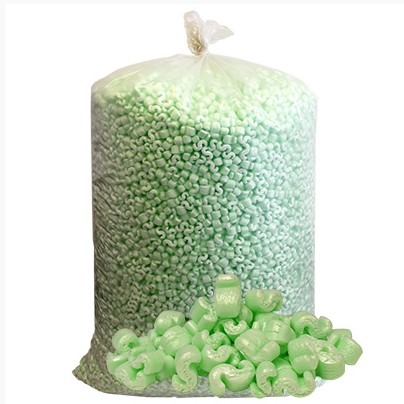
Styrofoam peanuts also come in green, the colour often used to mark cornstarch fill, so colour alone can’t confirm the material.
Cornstarch vs Styrofoam Packing Peanuts Comparison
Choose the Right Packing Peanuts for Your Stockroom with Globe Packaging

Globe Packaging dispatches loose fill orders the same day, with next-working-day delivery on UK mainland orders over £50.
The right packing peanut depends on where the bags are stored and how your customers will dispose of the fill. Cornstarch suits dry stockrooms and gives customers a simple disposal route through water or certified composting. Styrofoam holds its shape in damp conditions and can be reused, but it needs a dedicated drop-off point to be recycled.
We stock both starch-based Ecoflo biodegradable loose fill and polystyrene packing peanuts in 15 cubic foot bags, so you can match the fill to your storage conditions and your customers’ disposal options. Orders placed before 4 pm are dispatched the same day, with free next-working-day delivery on UK mainland orders over £50. Browse our packing peanuts range.
Frequently Asked Questions (FAQs)
Are Cornstarch Packing Peanuts Safe to Flush Down the Toilet?
Flushing them is best avoided, even though cornstarch peanuts dissolve. Softening a handful in a sink of water and rinsing them away in small batches is the safer route, because a large volume of wet starch can turn into a sticky paste before it fully breaks down and may slow a drain or toilet pipe.
Can You Put Styrofoam Packing Peanuts in Your Recycling Bin?
No. Styrofoam peanuts carry resin code #6, which makes them technically recyclable, but most council kerbside schemes aren't set up to sort lightweight EPS foam. They need to go to a dedicated drop-off location instead. In the UK, check your council’s accepted-items list or the Recycle Now postcode locator, as only a small number of household waste recycling centres take EPS and fewer still accept loose fill.
Can You Reuse Cornstarch and Styrofoam Packing Peanuts?
Yes, both can be reused if they’re still in good condition. Styrofoam peanuts hold their shape, and some independent pack-and-ship shops accept clean ones for reuse. Cornstarch peanuts can be reused while they stay dry, so squeeze the bag first. Soft, crumbly peanuts have absorbed moisture and are better dissolved.
How Long Do Cornstarch Packing Peanuts Take to Biodegrade?
There's no single fixed timeframe, since breakdown speed depends on the environment. In water, cornstarch peanuts dissolve within seconds to a couple of minutes. Home composting requires a specific mark like TÜV Austria's "OK compost HOME" to be confirmed.
Where Can I Buy Cornstarch and Styrofoam Packing Peanuts in the UK?
Globe Packaging stocks Ecoflo Ultra, a denser maize starch loose fill designed to perform like polystyrene in heavier applications while staying fully biodegradable and compostable. It holds up better against moisture than standard Ecoflo, and we supply it in 15 cubic foot bags alongside our standard biodegradable loose fill.
*Note: Product listings, prices, and delivery times shown are approximate and subject to change. Contact Globe Packaging for the latest information.
Related Articles
-resized-to-600x400.jpeg)
-resized-to-600x400.jpeg)
-resized-to-600x400.jpeg)
About Us
| Terms & Conditions | Delivery Services & Costs | Privacy Policy | Return & Exchanges | Payment | Testimonials | Overview | Video | E-Commerce | Amazon APass | PayPal Branded | Press | Catalogue | Learning | Contact | Sitemape-Commerce solutions by KOL Limited
All displayed prices are exclusive of VAT at 20%