Accept
 Reject


 0345 224 3691



 Enjoy the May Bank Holiday!

Price Match
We guarantee our prices are extremely competetive and should be the BEST prices you will find on-line, along with delivering the very best service. For this reason, we offer a price match against other on-line sellers. If you find the same product elsewhere on line, give us a call on 0345 224 3691 and we will match or even beat it! Note that the following conditions must be met for the price match to apply:
- The item must be available on a UK website at the advertised price, and readily available to purchase, with a like for like delivery offering.
-The item in question must have the same specifications, quantity and be produced by the same manufacturer - although we will usually price match even if made by a different manufacturer, as long as its a comparable quality.
- Auction sites such as ebay and amazon do not qualify for price match.
- The price match cannot be used in conjunction with any discount codes or promotional items.
- If there are pricing errors on competitors sites that are clear typographical pricing errors, these will not be matched.
- Note that for corrugated lines (boxes/cartons), the item must be of the same specification (fluting and thickness) and be unbranded.
Call us on 0345 224 3691 and we will be more than happy to help!
Plastic Wrap for Parcels: Types & Sizes

Key Takeaways
-
The main types of plastic wrap for parcels are hand stretch wrap, heavy-duty stretch wrap, mini stretch wrap, machine stretch wrap, bubble wrap, foam wrap, and layflat tubing.
-
Stretch wrap holds loads together through tension, while foam wrap prevents surface scratches on delicate finishes without adding bulk.
-
Bubble wrap absorbs impact during transit, while layflat tubing creates made-to-measure sleeves for items no standard bag fits.
-
Film colour serves a sorting function. Clear keeps labels readable, black conceals high-value or branded contents, and blue flags priority orders or customer-specific stock in busy dispatch areas.
-
Globe Packaging stocks various types of plastic wraps alongside biodegradable and paper bubble wrap options, with free UK mainland delivery on orders over £50.
How to Match the Right Wrap to Every Parcel You Send
Start with what the wrap needs to do. Stretch film holds cartons and pallets together, bubble wrap absorbs knocks during transit, foam wrap prevents surface scratches on polished or painted finishes, and layflat tubing creates custom-length sleeves for items too long or oddly shaped for any standard bag. Choosing the wrong type is how pallets shift in transit, glassware cracks inside a sturdy box, or chrome surfaces arrive scuffed despite being wrapped.
The second decision is size and thickness. Stretch wrap comes in 400mm and 500mm widths, with micron thickness ranging from 17µm for everyday cartons up to 25µm for heavy or sharp-edged loads. Bubble wrap is sized by bubble diameter, with 10mm for delicate items and 20mm for heavier products. Getting either measurement wrong means either wasting material on light loads or watching thinner film tear on the first sharp edge it meets.
Globe Packaging stocks all seven wrap types covered below, from hand and machine stretch film to bubble, foam, and layflat tubing, alongside biodegradable options, with free UK mainland delivery on orders over £50.



Types of Plastic Wrap for Parcels
Hand Stretch Wrap
Hand stretch wrap is the most common film for wrapping parcels, cartons and pallets by hand. It comes on a roll and is pulled around the load under tension, clinging to itself rather than needing tape or adhesive to hold its shape.
It suits a wide range of everyday jobs, including:
-
Small businesses packing orders manually
-
Warehouses with occasional pallet-wrapping needs
-
Bundling multiple parcels together
-
Protecting cartons from dust and dirt
-
Holding irregular-shaped packages in place
-
Securing boxes to a pallet
Rolls come in two core formats. A standard-core roll has a plain cardboard tube that the user grips directly, while an extended-core roll has tube ends that stick out past the film, working as built-in handles.
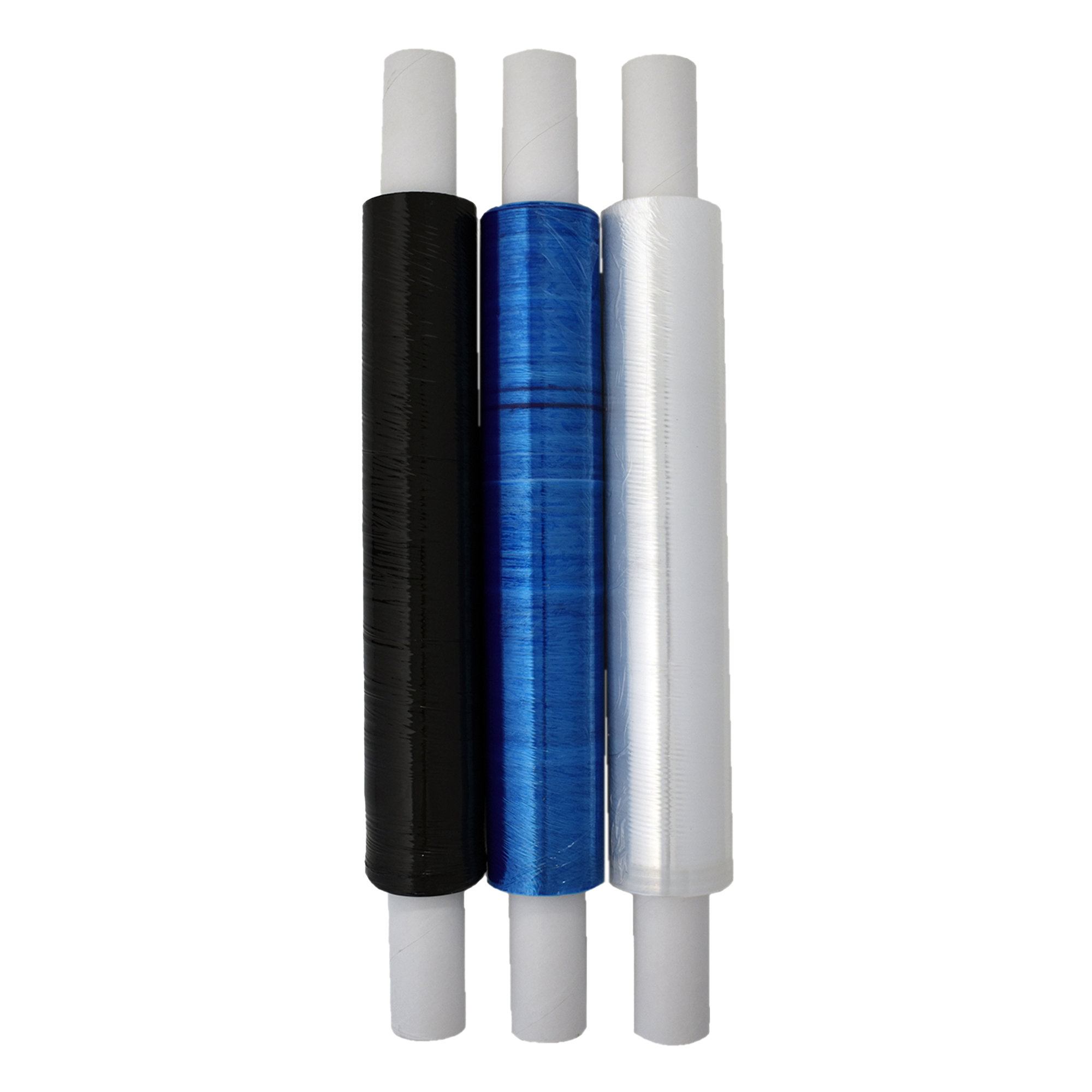
Extended core rolls keep hands off the moving film, so packers can wrap for longer with less strain on busy shifts.
Heavy-Duty Stretch Wrap
Heavy-duty stretch wrap is thicker and usually wider than standard hand film, built for loads that would tear or loosen ordinary wrap. It suits large or heavy cartons, pallets stacked with uneven box sizes, loads with exposed sharp edges, industrial components, bulk stock transfers and freight pallets that need stronger containment.
Mini Stretch Wrap
Mini stretch wrap is a narrower version of standard pallet film, made for smaller parcels, bundles and awkward-shaped goods where a full-width roll would be wasteful. It gives more control over tight bundling jobs, such as holding several small boxes together or securing long items like pipes and tubing. It also works well for wrapping furniture components, reinforcing cartons before courier collection and keeping product packs together inside a larger shipping box.
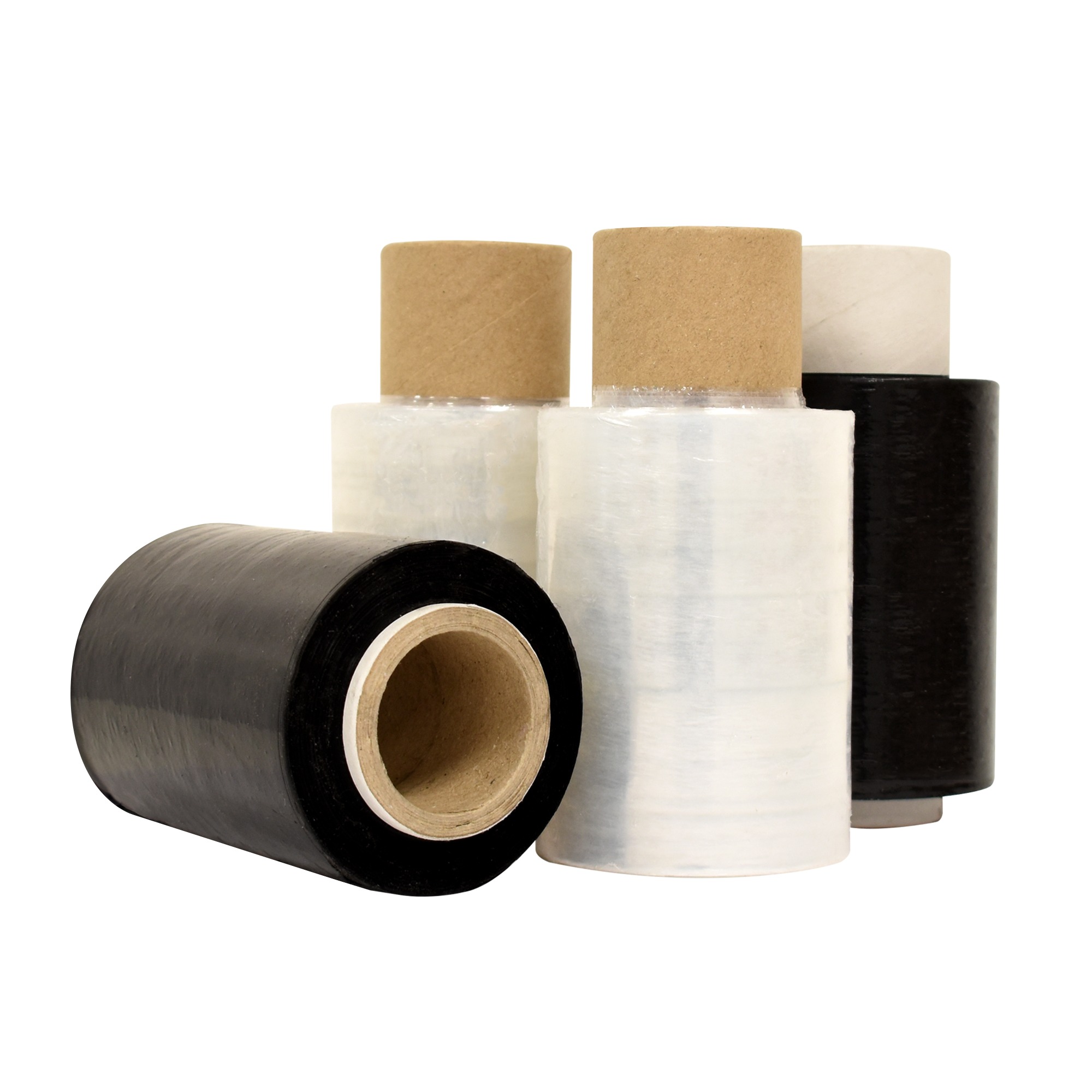
Mini stretch wrap rolls are light enough to use with one hand, making them easy to handle when bundling small items at a packing bench.
Machine Stretch Wrap
Machine stretch wrap is built for automated or semi-automated pallet-wrapping equipment. It's the right call for distribution centres, manufacturers, large e-commerce fulfilment operations and any warehouse sending out pallets daily, since machine wrapping applies film at a consistent tension and overlap pattern that's hard to match by hand.
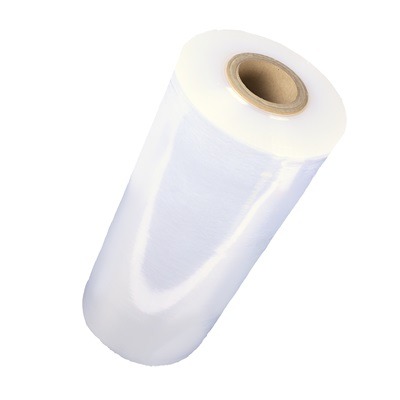
Machine stretch wrap needs to match the wrapping machine's stretch setting, since the wrong film grade can break mid-cycle or waste material.
Bubble Wrap
Bubble wrap protects glass, ceramics, electronics, bottles, cosmetics, artwork and other fragile products from impact and vibration during transit. It comes in small-bubble and large-bubble formats. Small bubbles conform closely to smaller or more delicate items, while large bubbles create a deeper cushioning layer better suited to heavier, more robust products.
Foam Wrap
Foam wrap is a lightweight, flexible material built to stop scratches, scuffs, and surface marks rather than absorb heavy impact. It's soft, non-abrasive, and generally low-lint, which makes it a better match than bubble wrap when a product's finish is the main concern rather than shock protection.
Glassware, mirrors, picture frames, ceramics, sanitaryware, furniture components, chrome and polished metal items, electronics, screens, cosmetics and jewellery all benefit from foam wrap's smooth barrier.
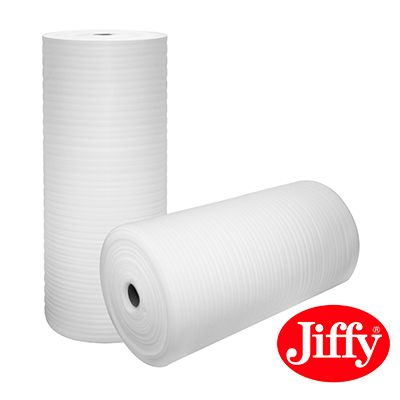
Products that need surface protection and shock absorption can be wrapped in foam first, with bubble wrap added on top for deeper cushioning.
Layflat Tubing
Layflat tubing is a continuous roll of flat polythene tube, open at both ends, that gets cut to length and sealed to create a made-to-measure protective sleeve or bag. It solves a problem standard bags can't: when a product is too long, too wide, or an odd shape for any pre-made size on the shelf.
Pipes, tubing, trim, cables, posters, blinds, rolled fabrics, timber pieces, furniture components and irregularly shaped hardware all suit this format.
To use layflat tubing:
-
Place the item inside the tube.
-
Cut the tubing to the length you need.
-
Close both ends with tape, twist ties, staples, or a heat sealer.
Layflat tubing is not a substitute for cushioning, though. Fragile goods still need foam wrap, bubble wrap, or another suitable insert before going inside the tubing or into a shipping carton.
What Stretch Wrap Colour Tells Your Team
Clear Wrap for Label & Barcode Visibility
Clear stretch wrap is the best all-purpose choice because it keeps labels, barcodes, handling instructions, and carton markings visible without unwrapping anything. It's especially useful for general fulfilment and logistics work, where warehouse staff need to identify cartons quickly, and couriers need a readable label every time.
Black Wrap for Discreet or High-Value Shipments
Black stretch wrap is opaque, hiding the contents of a wrapped parcel or pallet from view. It suits concealing branded cartons, shipping higher-value stock, moving sensitive goods, storing clearance or surplus inventory, and giving mixed pallet loads a more discreet dispatch presentation.
Blue Wrap for Stock Identification
Blue stretch wrap works as a visual flag, making specific shipments, departments or stock categories easier to spot in a busy dispatch area. Teams can use it to mark priority orders, returns or goods for a particular customer, so the right pallet is picked the first time.
What Sizes Does Plastic Wrap Come In?
Stretch wrap is chosen by three measurements: width, thickness, and roll length. Width decides how much of a parcel or pallet each pass covers. Thickness, measured in microns (µm), affects strength and puncture resistance, while roll length matters most for busy packing lines that want fewer roll changes.
Common stretch wrap thicknesses include the following, though exact options vary between suppliers.
Stretch Wrap Widths
Hand stretch wrap usually comes in two widths, 400mm and 500mm, measured across the roll from one end to the other. A 400mm roll is a flexible all-rounder for regular carton loads and standard pallets, and its lighter weight makes it easier to control by hand.
A 500mm roll covers more of the load with each pass, suiting larger pallets, taller loads and heavy cartons. Heavy-duty 25µm hand rolls and machine rolls usually come in this wider size.
Machine Roll Lengths
Machine rolls hold far more film than hand rolls. A 16kg machine roll runs to around 1,600m at 20µm or 1,400m at 23µm before stretching, since thinner film gives more length for the same weight. Once stretched on a wrapping machine, the same roll covers considerably more of the load.
Bubble Wrap Sizes
Bubble wrap is sized differently, by bubble diameter, width and length. Small bubble, around 10mm across, comes in widths from 300mm to 1500mm and full rolls of 100m. Large bubble, around 20mm, gives thicker cushioning and usually comes in 50m rolls.
Protect Every Parcel & Pallet With Globe Packaging
Choosing the wrong wrap can leave barcodes unreadable, pallets unstable or fragile items scratched in transit. Matching the film type, thickness and width to each load prevents most of these problems before a parcel leaves the warehouse.
At Globe Packaging, we stock hand, heavy-duty, mini and machine stretch wrap in clear and black, with blue available in standard hand rolls, alongside bubble and foam wrap for cushioning. Our biodegradable bubble wrap uses recycled content to reduce new plastic. Shop our plastic wrap range today, with free next-working-day delivery on UK mainland orders over £50 (exc VAT) and same-day dispatch on orders placed by 4pm.
Frequently Asked Questions (FAQs)
Which is thicker, 17 micron or 25 micron stretch wrap?
25 micron film is thicker than 17 micron film. Micron thickness measures how much material makes up the wrap, so a higher number generally means a stronger, more puncture-resistant film suited to heavier or sharper-edged loads.
Can I use stretch wrap instead of a shipping box?
No. Stretch wrap secures cartons and pallets together but doesn't replace a box's structural protection. A product still needs a sealed carton, and often foam wrap, bubble wrap or void fill inside it, before stretch wrap is added around the outside.
Does stretch wrap protect fragile items from breaking?
Not on its own. Stretch wrap holds boxes together and stops shifting during transit, but it doesn't cushion against impact. Fragile items need bubble wrap or foam wrap inside a sturdy box first, with stretch wrap used afterwards to secure the load.
How many layers of stretch wrap does a pallet need?
There's no fixed number since it depends on load weight and stability, but most pallets need several firm passes around the base to anchor cartons, followed by a spiral pattern moving upward, with each pass overlapping the last so no gaps are left between layers.
Does Globe Packaging offer eco-friendly bubble wrap?
Yes. Globe Packaging offers biodegradable bubble wrap made from recycled LDPE. We also stock paper bubble wrap, a plastic-free alternative made from 100% recycled paper that can be recycled with household paper after use.
*Note: Product listings, prices, and delivery times shown are approximate and subject to change. Contact Globe Packaging for the latest information.
Related Articles
-resized-to-600x400.jpeg)


About Us
| Terms & Conditions | Delivery Services & Costs | Privacy Policy | Return & Exchanges | Payment | Testimonials | Overview | Video | E-Commerce | Amazon APass | PayPal Branded | Press | Catalogue | Learning | Contact | Sitemape-Commerce solutions by KOL Limited
All displayed prices are exclusive of VAT at 20%